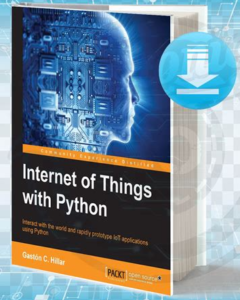
The Internet of Things (IoT) is a rapidly growing field that has the potential to revolutionize the way we live and work. By connecting everyday objects to the internet, we can create smart homes, smart cities, and even smart factories.
One of the most important technologies for developing IoT applications is Python. Python is a versatile programming language that is easy to learn and use, making it a great choice for beginners and experienced developers alike. In this article, we will show you how to use Python to develop IoT applications.
1. Connecting Devices to the Internet
The first step in using Python for IoT is connecting devices to the internet. This can be done using a variety of methods, including Wi-Fi, Ethernet, and cellular networks. Once the devices are connected, they can be controlled and monitored remotely using Python scripts.
2. Collecting Data from Devices
Once the devices are connected to the internet, Python can be used to collect data from them. This data can include temperature, humidity, motion, and other environmental factors. The data can be used to create visualizations, track trends, and identify patterns.
3. Controlling Devices Remotely
Python can also be used to control devices remotely. This can be useful for controlling lights, locks, and other devices in the home or office. Python scripts can be used to turn devices on and off, set timers, and change settings.
4. Automating Tasks
Python can be used to automate tasks that would otherwise need to be done manually. For example, Python scripts can be used to turn off the lights at night, turn on the coffee pot in the morning, and water the plants.
5. Creating Dashboards and Visualizations
Python can be used to create dashboards and visualizations that display data from IoT devices. This can be useful for monitoring performance, identifying trends, and making informed decisions.
6. Integrating with Cloud Services
Python can be integrated with cloud services, such as AWS IoT and Azure IoT Hub. This allows Python scripts to access data from IoT devices stored in the cloud and to control devices remotely.
7. Building IoT Applications
Python can be used to build complete IoT applications. These applications can include features such as data collection, device control, and data visualization. IoT applications can be used to solve a wide range of problems, from home automation to industrial monitoring.
8. Developing IoT Products
Python can be used to develop IoT products. These products can be sold to businesses and consumers. IoT products can include smart home devices, industrial sensors, and medical devices.
9. Creating IoT Startups
Python can be used to create IoT startups. These startups can develop and sell IoT products and services. IoT startups can have a significant impact on the world, by making it easier to connect devices to the internet and use data to solve problems.
10. Learning IoT with Python
Python is a great language for learning IoT. It is easy to learn, powerful, and versatile. There are many resources available to help you learn IoT with Python, including online tutorials, books, and courses.
3. Common Python Libraries for IoT
Python offers a vast collection of libraries specifically designed for IoT development. These libraries simplify the process of interfacing with various hardware components and provide access to essential functions and protocols. Some of the most popular Python libraries for IoT include:
- Adafruit IO: A cloud-based platform that enables developers to connect and manage IoT devices. It provides a user-friendly interface for monitoring, controlling, and storing data.
- Paho MQTT: A library that allows Python applications to communicate with MQTT brokers. MQTT is a lightweight messaging protocol commonly used in IoT systems for real-time data exchange.
- PyModbus: A library that supports Modbus communication. Modbus is a widely adopted industrial protocol for connecting to sensors, actuators, and other field devices.
- WebSockets: A library that facilitates bidirectional communication between a Python application and a web server. This is useful for real-time data streaming and remote device control.
- bleak: A library that enables Python applications to interact with Bluetooth Low Energy (BLE) devices. BLE is a popular wireless technology used in IoT applications.
Conclusion
Thank you for reading this guide on how to use Python for IoT development. I hope you have found it helpful. If you have any questions or comments, please don’t hesitate to contact me.
In the meantime, be sure to check back for more IoT tutorials and resources. I’ll be posting new content regularly so you can stay up-to-date on the latest trends and developments in the IoT space.